Foredeck Scupper Rebuild
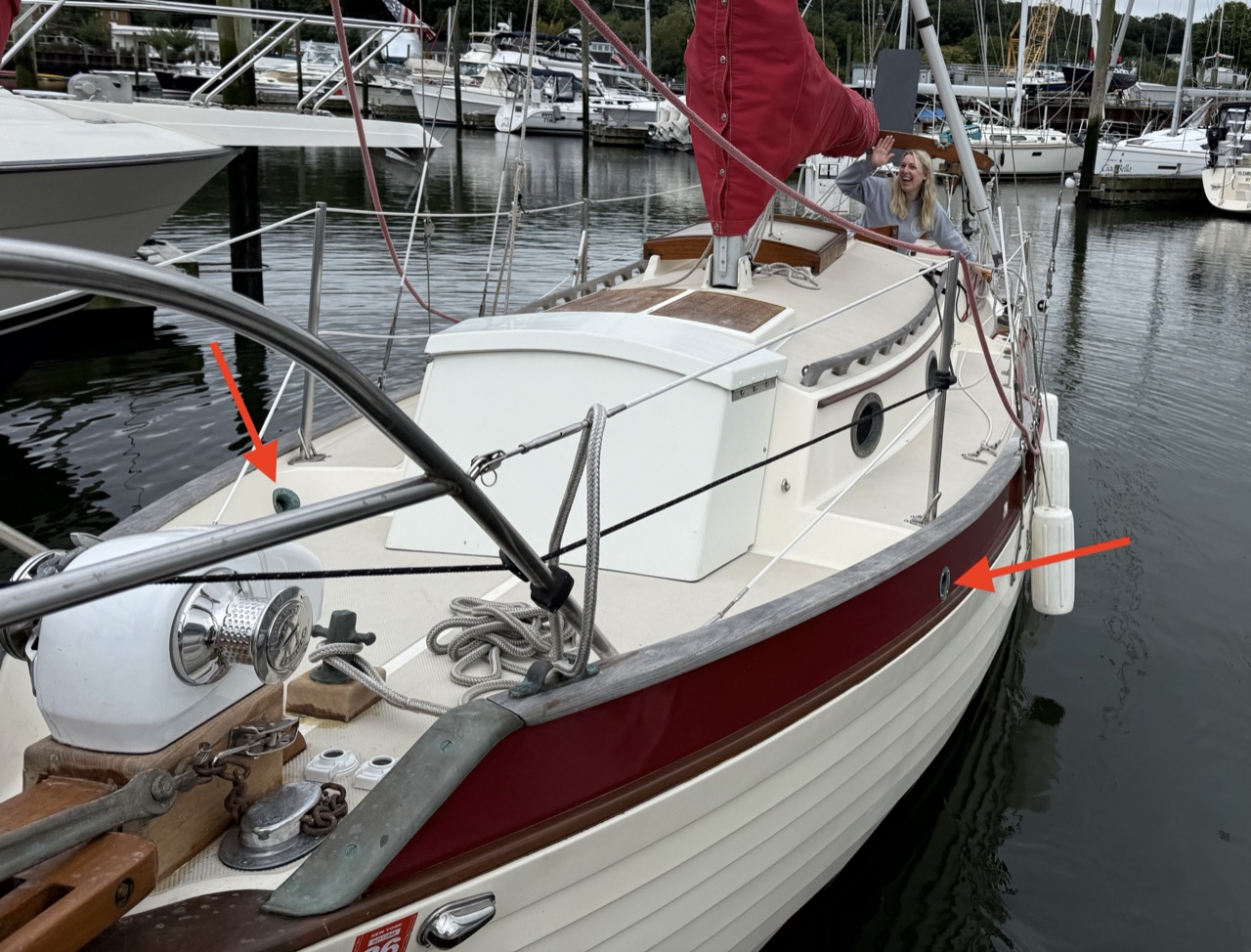
The Nor'Sea 27's foredeck has two scuppers that drain midship. Any water that comes aboard up front drains there instead of running aft into the cockpit. It's a good arrangement. The downside is that the drain hoses pass through the interior of the boat before exiting through the hull, and that internal run is a known trouble spot. The hose, the connections, and the bedding compound all age together, and leaks develop. Some sailors replace the flexible hose entirely with a fiberglass tube for a more permanent solution. If these come back in another ten years, that's probably the next step.
What Was Found
Pulling the deck fittings showed the expected picture. The bedding compound on the deck fittings had hardened and cracked away from the deck. Inside the boat, the hose where it met the hull-side fitting was deteriorated, and the connection between the two was no longer sealed.
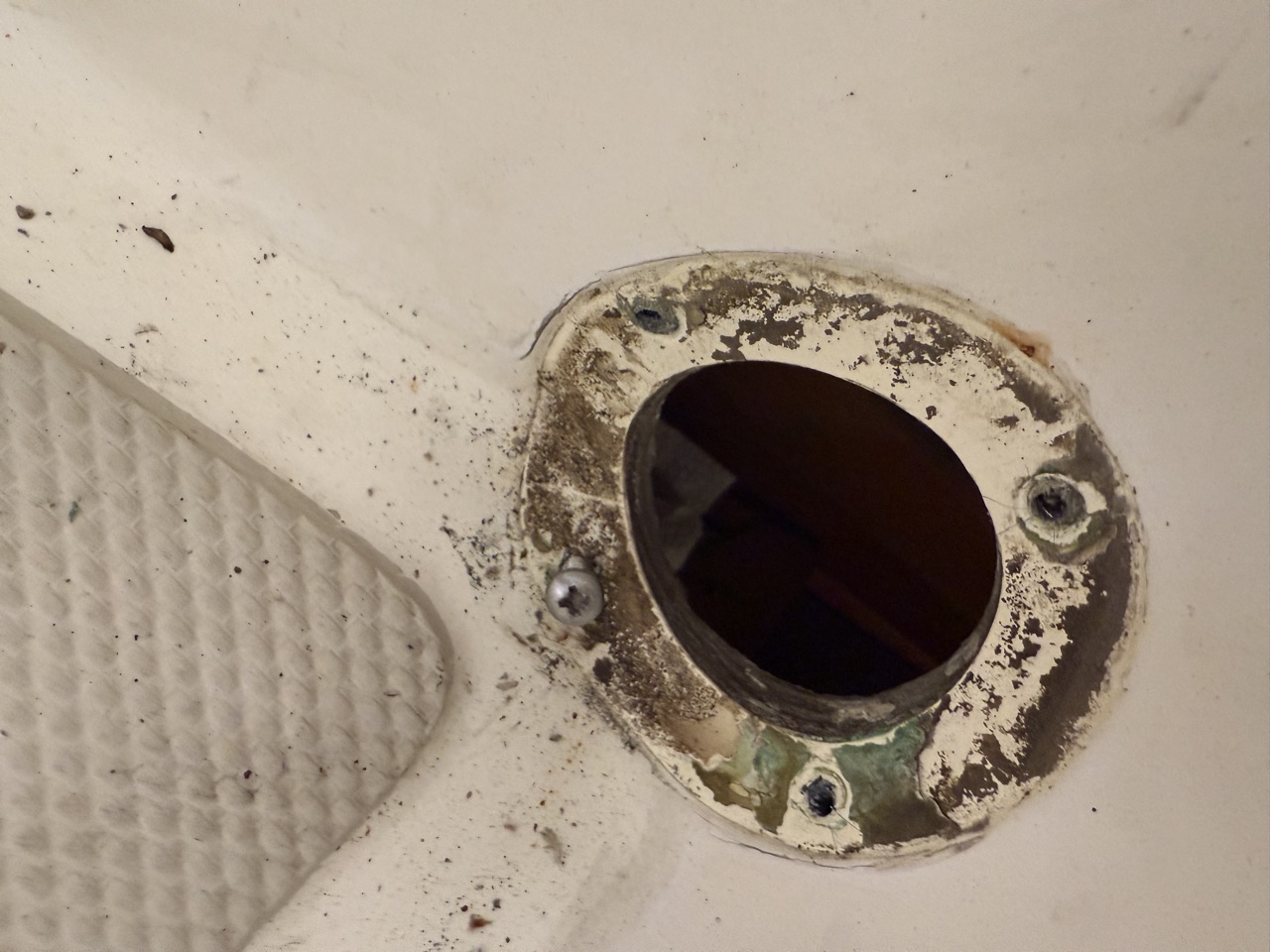
The deck opening with the old fitting out. The brown ring is years of sealant that had long since stopped doing anything.
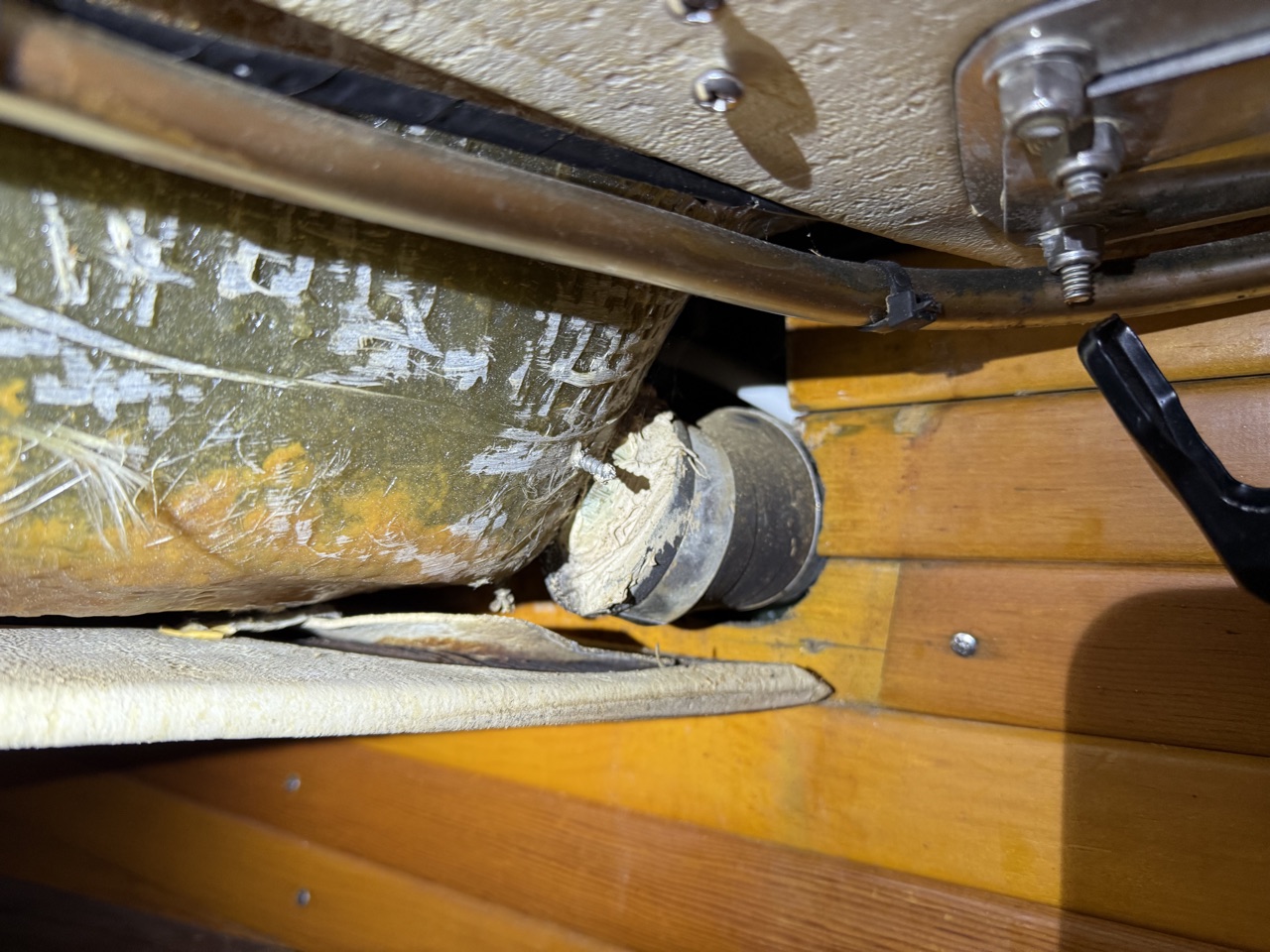
The original fitting from inside the boat before the hose was removed.
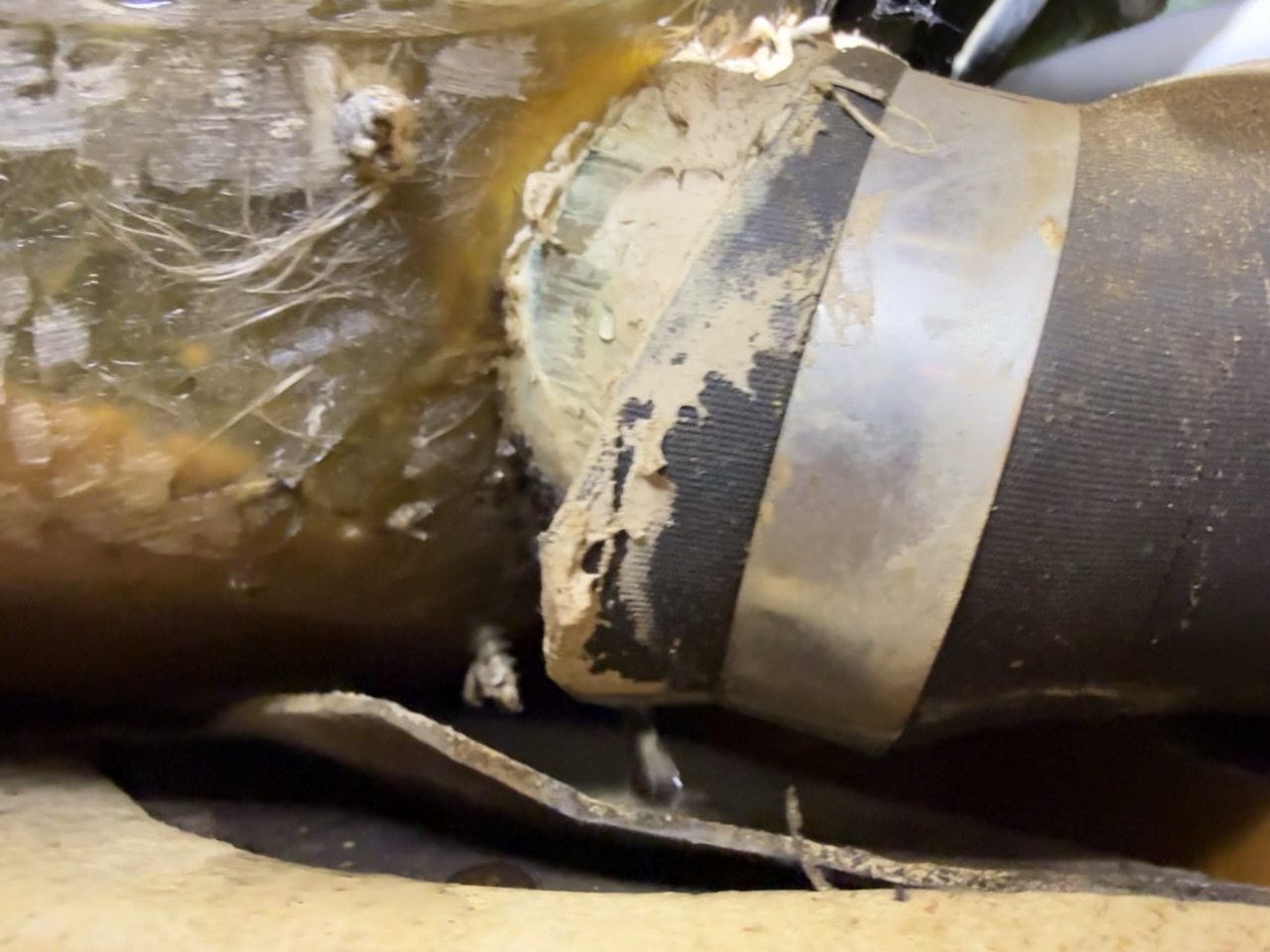
The hose-to-fitting connection. The bedding compound had cracked through and the hose itself had hardened.
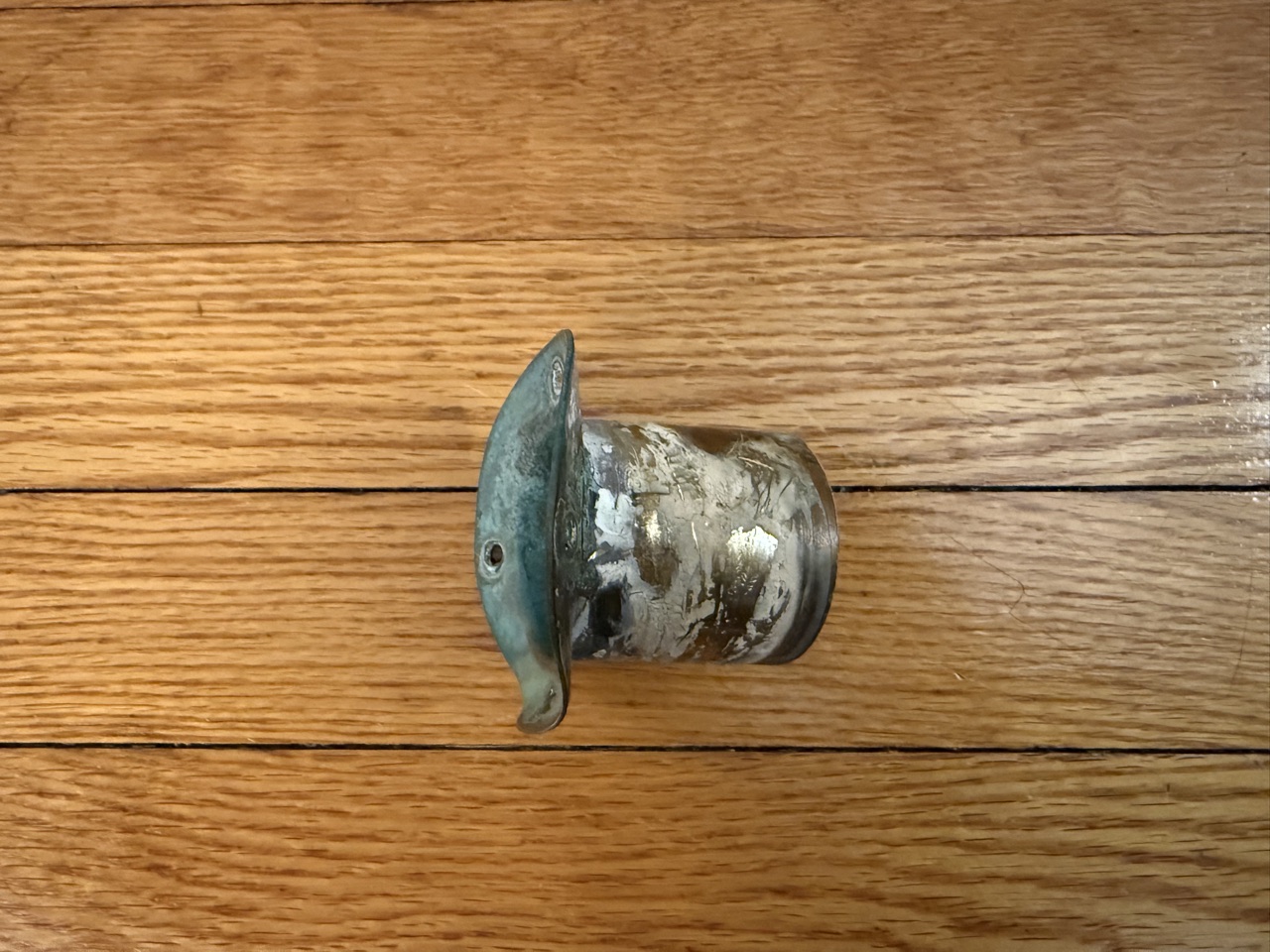
The old deck fitting off the boat.
The Low Point
Beyond the deteriorated materials, there was a geometry problem. The brass connector at the hull had been installed at an angle that created a low point partway along the run. Water entering the scupper had to fill that low point before it could continue out through the hull. That trapped water sitting in the line accelerated deterioration and gave any pinhole leak a reservoir to work from.
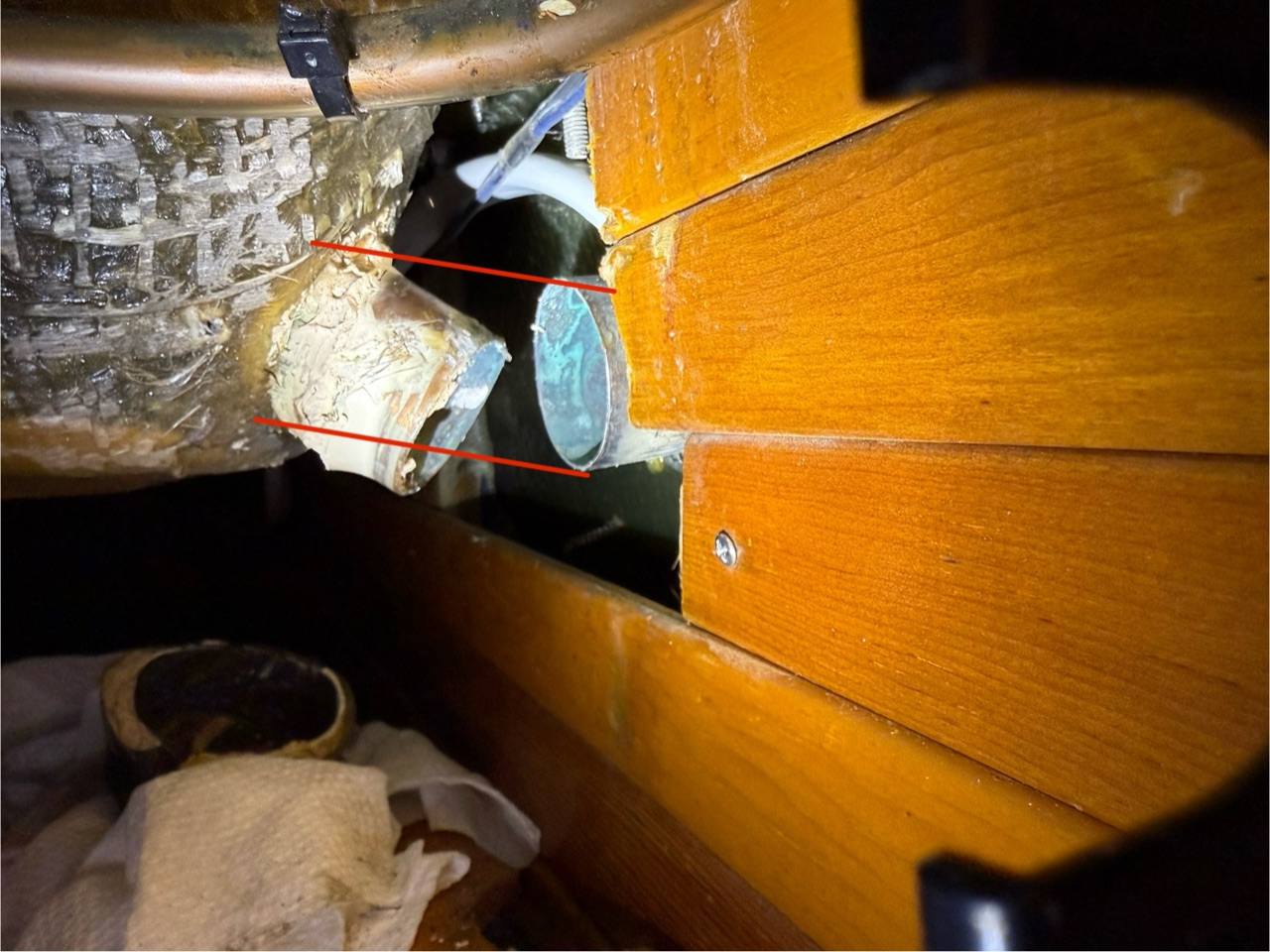
The red lines show a more optimal hose route. The original connector sat at an angle that created a low point partway along the run instead of a continuous downward path to the hull exit.
The Fix
The solution was to cut the brass connector shorter. Trimming it back changed the exit angle enough to eliminate the low point, so the new hose could run continuously downhill from the deck fitting to the hull exit. No water sitting anywhere in the line.
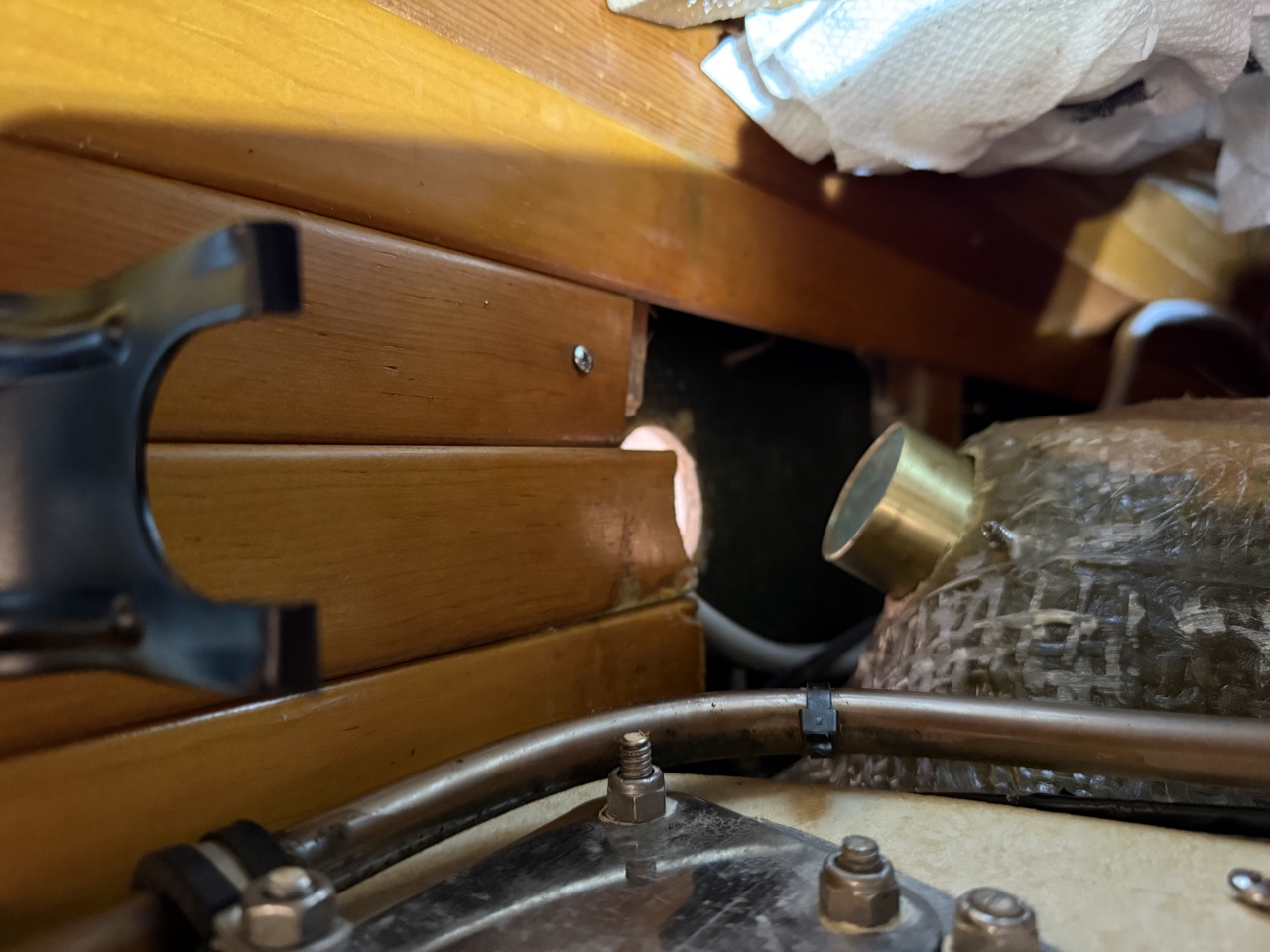
Connector cut shorter. The improved angle gives the hose a straight downhill path to the hull exit.
New hose was run from the deck fitting to the connector and clamped at both ends. The deck fittings were cleaned up, rebedded with 4200, and reinstalled with new screws.
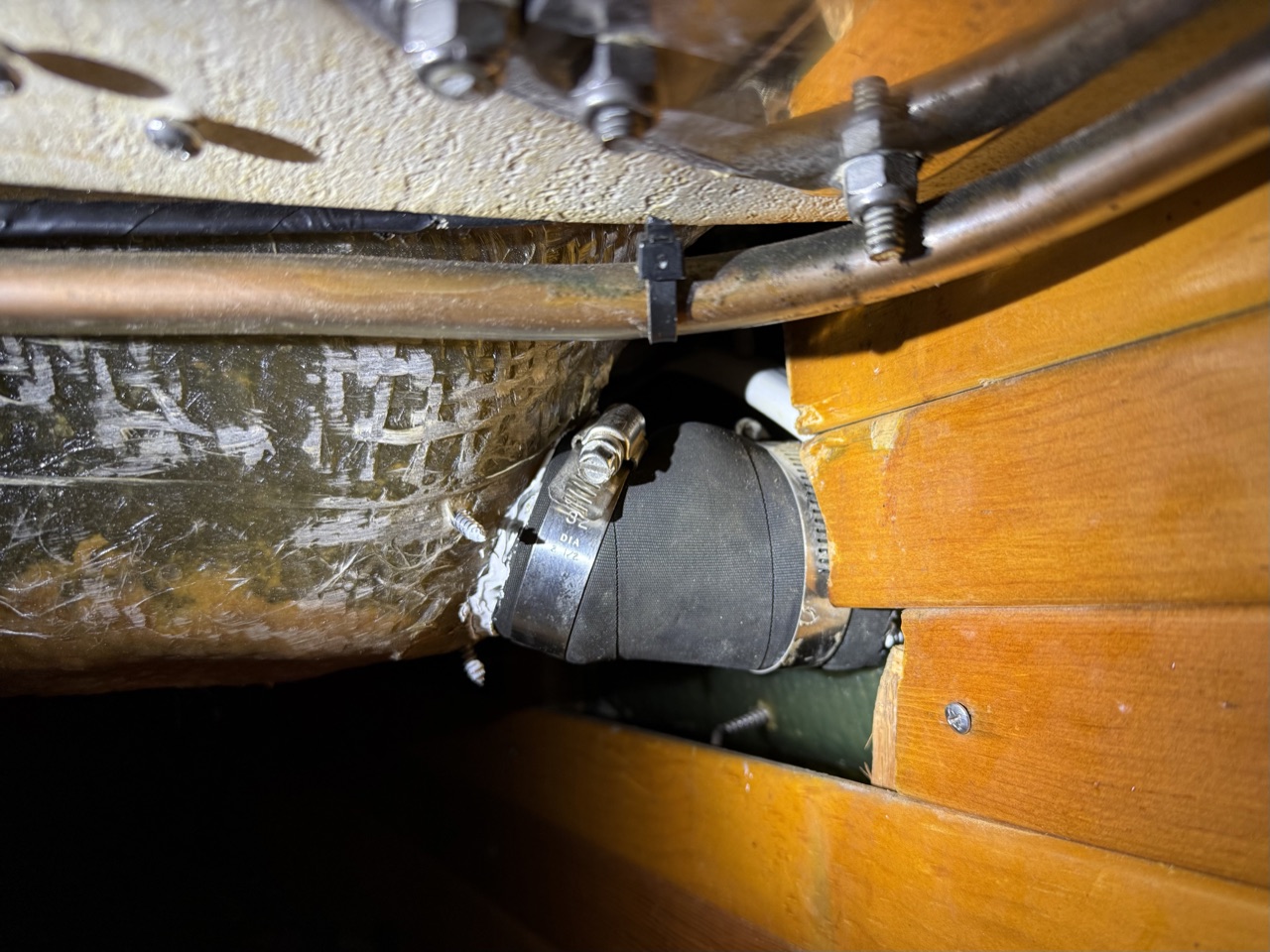
New hose clamped at both ends, running straight down to the hull.
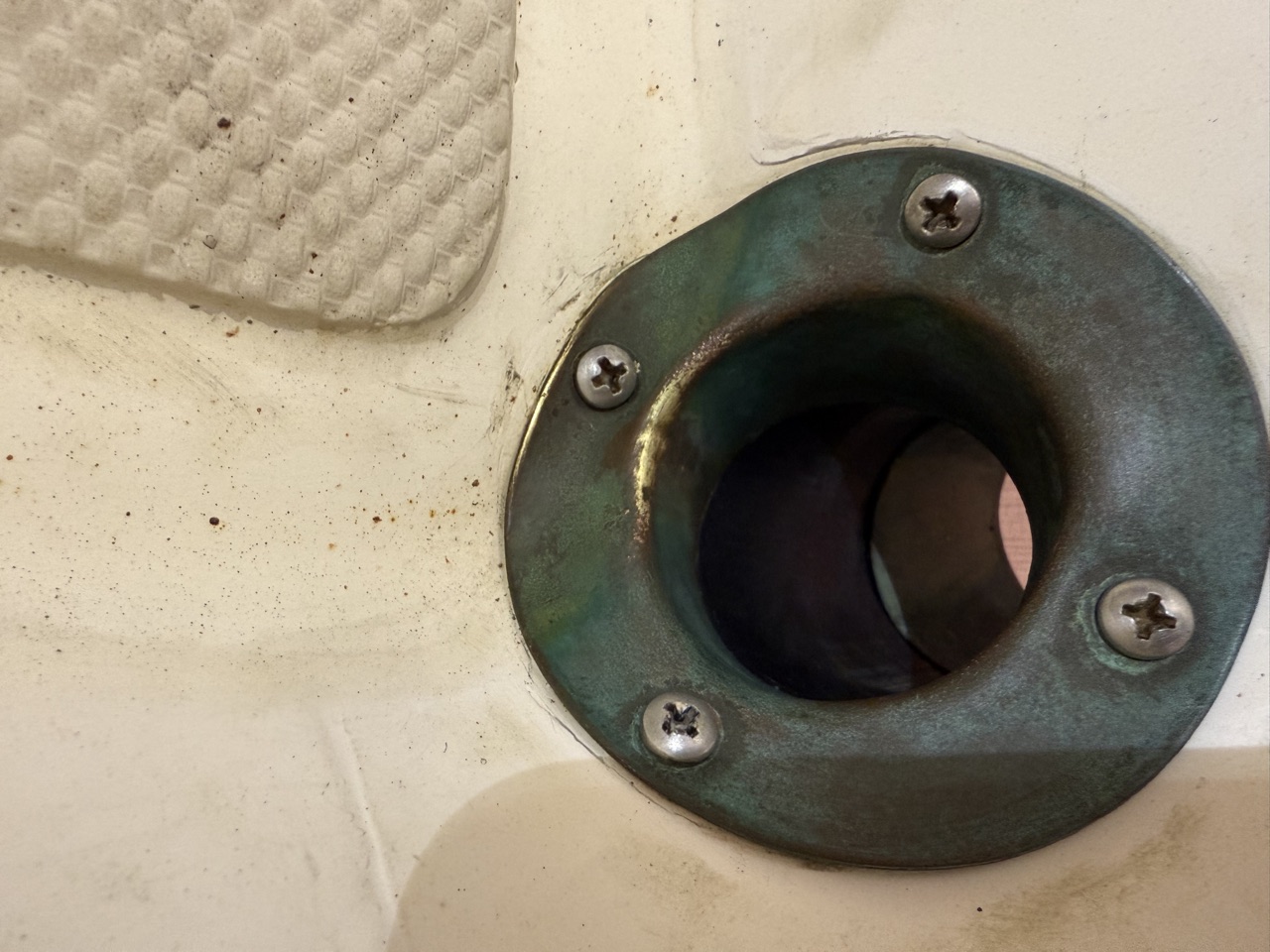
No more leaks!